A Life Journey Across Italy and France

Arriving in Milan: A Long-Awaited Meeting
At about 6:00 in the morning on November 6, local time, we arrived in Milan, Italy. A large tour group from China was on the same flight, so there were many passengers at immigration, and we waited in line at customs for more than two hours. We had planned to contact Brother He, who was receiving us, only after we cleared customs. To our surprise, he and his wife had already been waiting at the airport for a long time — more than two hours. We could not help feeling sorry about that.
On the way to their home, we talked the whole way and gradually learned about Brother and Sister He's experiences over the years. They have been in Italy for more than twenty years. Back in China, they ran a garment factory. At that time the brother had already been saved, but he did not attend meetings much. As he himself recalled, whenever a brother came looking for him to go to a meeting, he would even deliberately avoid him. His wife was saved only shortly before they came to Italy.
After coming to Italy, they continued in the garment business. For the first three years they worked for others; only later did they begin running their own business. Gradually they formed a cross-border way of operating: design, pattern-making and sales were done in Italy, while production was placed in China. After years of hard work, they can now speak Italian fluently with local people, and they have built good fellowship and coordination with the local saints. Under the long-term shepherding and support of the brothers and sisters, they gained a deeper understanding of the church life and gradually took up a burden for the church's service. They have a son and a daughter. Their daughter is the elder; she was born in China, later followed them to live in Italy, and is now married there with children of her own. Their son was born in Italy, graduated just last year, is now working, and still lives with his parents.
When we arrived at their home, we found it had only two bedrooms, with one kitchen, one living room and one bathroom. The brother told us his son happened to be going on a business trip, so his room could be made available for us. Thinking it over later, we guessed that in order to free up the room for us, his son may have deliberately stayed elsewhere for the night. It was only a small arrangement, yet it let us feel the couple's warmth and thoughtfulness as hosts.
Turin: Blending Across Language and Borders
The next day, November 7, we were to go together to Turin to attend the first Lord's table meeting there. Brother He had already promised to drive some other saints there, so he first took us to the train station, and we travelled to Turin by train on our own, with tickets we had bought in advance.
There are only a little over twenty saints in Turin, yet more than 280 people attended this first Lord's table meeting. Most had come from neighbouring European countries, and some saints had even flown in specially from the United States for this meeting.
The meeting was held mainly in English and Italian, with Chinese conveyed through translation. Being there, what moved me most was how sweetly and harmoniously many saints who had come from China to live in Europe coordinated with the English- and Italian-speaking saints. Different languages and different cultural backgrounds had not become a barrier between them; instead, in their common life of faith, a natural closeness and oneness appeared.
This also gave me a more direct understanding of the church life overseas. The Chinese saints are diligent and well-provided, willing to pay the price, and in many practical matters of coordination and service they truly are a force that cannot be ignored. And that force is not merely outward labour; it lies even more in their willingness to give themselves for the common commission.
During a break in the meeting, we met an older couple from HN Province who have lived in Italy for more than three years. The brother's family name is Qi, and the sister's is Guo. Brother Qi seemed already quite well adapted to the local church life, and with great interest he privately introduced me to several foreign saints he knew. In our conversation, he also shared several experiences from their past in China.
One of those experiences concerned a house of theirs in LY City, HN Province. After Sister Guo was saved, she had some special experiences. One day she told Brother Qi that the Lord had spoken to her: they were to buy a new house in LY, and the Lord would use that house in the future. Later, because of the family's practical needs, they did buy a house. Still later, for other reasons, they decided to sell it. At that time the sales contract had already been signed; they only needed to wait a little over two more months before inspection and handover.
It happened that during exactly that period, a training centre in HN was disturbed and needed to find another temporary venue. The brothers came to Brother Qi for fellowship, hoping to borrow their house. The timing matched the gap before the handover perfectly. What had originally been an ordinary house purchase later showed a wonderful fitting together in this arrangement.
Sister Guo had another experience. She once dreamed that they had bought a new house whose roof was conical in shape. That dream found its corresponding experience only five or six years later — their son bought a new house in Italy, and the shape of its roof was just like what she had seen in the dream.
Listening to these experiences, I felt that everyone has his or her own unique story before the Lord. Some things cannot be understood when they happen; only looking back after many years do we find in them many details worth remembering.
Along the Mediterranean: A Journey Given to the Gospel
The meeting continued until noon the next day, November 8. According to the original plan, we would ride in a car rented by Brother Steward and join their gospel journey. They planned to set out from Turin, Italy, travel west along the Mediterranean coastal roads, pass through French cities such as Marseille, Nice, Cannes and Montpellier, and distribute the gospel tract The Mystery of Life and French Bibles along the way. The journey's destination was Toulouse, France, where Brother Steward and his family are carrying out gospel work.
Also travelling with us were Brother Frank and his wife and Sister Olivia. Brother Frank is also Brother Steward's in-law. Their average age is around sixty. They hold dual citizenship of the United States and Taiwan. Except for Brother Steward, who still has remote teaching work and has obtained long-term residence through a special-talent visa, the others are all retired. They currently all live in Brother Steward's home in Toulouse, coordinating and serving together.
By ordinary reasoning, people of that age could completely choose a settled life and enjoy their retirement. Yet they did not stay in the United States to live in comfort and ease. Instead, they travelled far to Europe and became a group of valiant warriors for Christ, to gain people and gain ground. In order to carry out the gospel in the French-speaking region, they specially enrolled in French classes. In order to stay in Toulouse for the long term, they even need to hold two passports and travel back and forth within the period permitted by a tourist visa. None of this sounds easy, but to them it all seems to be a price that must be paid for the gospel's move.
From Turin to Toulouse, the navigation showed a total distance of more than 800 kilometres. Brothers Steward and Frank took turns driving. We stopped for two nights on the way, staying in homes booked through Airbnb.
Travelling together, I had the opportunity to observe their life up close. Whether in how the brothers and sisters got along with one another, or in their attitude toward the gospel, I sensed a rare sweetness. They coordinated with one another without much accounting; they were full of joy when preaching the gospel; and they treated daily life with unusual simplicity. This made me realise that a true offering does not necessarily come with dramatic scenes. Very often, it is simply a group of people willing to lay aside a comfortable life, support one another, and travel a long way, just for one thing they consider worthwhile.
Because our time was limited, we stopped to preach the gospel only at a square in Marseille and a market in Nice. We first handed gospel tracts to passers-by. If someone was willing to stop and listen to us introduce more, and the situation was suitable, we would give them a French Bible. In the end, we gave out a little over ten French Bibles.
There was nothing particularly dramatic about the whole process, and not everyone was willing to stop and listen to us. But when we truly went into the crowd and handed a gospel tract to a complete stranger, we were filled with joy inside. That joy did not depend entirely on whether the other person accepted it; it came from having actually taken part in this matter ourselves.
On both nights, we did not arrive at our lodging until after nine in the evening. After a whole day of long-distance driving, everyone was in fact quite tired, yet they still insisted on cooking together in coordination. If we were in China, at that hour we would probably just find somewhere to eat, to save time and effort. They, however, did not seem to find this troublesome at all.
Of course, their way of cooking was also very simple — not like Chinese cooking, with its attention to knife work, heat, seasoning and the order of putting things into the pan. The sisters usually just washed the vegetables, seasoned them, put them on a baking tray, and sent them into the oven together to roast. When the food was ready, everyone sat around together and ate.
Every morning, the sisters also prepared that day's lunch in advance. Compared with eating out, this saved money and made it easier for everyone to keep travelling. Two lunch scenes on the road have left a deep impression on me to this day. Once, we ate on a wooden boardwalk by the sea, facing the ocean, and the aroma of the food even attracted a flock of greedy seagulls that lingered around us looking for food. The other time was beside a highway, where a few stone tables and stools surrounded by weeds became our temporary dining table.
Although we did not truly sleep outdoors on this trip, we certainly experienced eating in the wind.
Difficulties Become Food: Knowing the Lord in Experience
During the long drive, Brother Steward once fellowshipped with me about Daniel 7:2–3:
Daniel responded and said, I was watching in my vision by night, and there were the four winds of heaven, stirring up the Great Sea. And four great beasts came up from the sea, each different from the other.
Dan. 7:2–3
The footnotes to the verses mention that the sea here refers to the Mediterranean Sea, that the first three beasts have already passed, and that the fourth beast has not yet appeared. In his view, what this passage depicts is that the political situation around the Mediterranean will be stirred up, preparing the environment for the appearance of the fourth beast.
He also mentioned that at present, countries such as France, Spain, Italy, Germany and Greece have seen continuing large-scale social protests and strikes, one after another. Whether these phenomena are related to the "four winds" being stirred up, as spoken of in the verses, is hard to judge with certainty, but it is worth watching. In his view, God will surely set up His lampstands in the cities along the Mediterranean coast, and this is also an important burden behind their choice to come here to carry out the gospel.
This fellowship made me feel that what they are doing is not merely a simple trip or a short-term gospel action. Rather, they carry a concern for Bible prophecy and the situation of the age, hoping to gain more people for the Lord in the cities along the Mediterranean coast.
Along the way, Brother Steward's wife, Sister Priscilla, also shared many stories of their personal experiences of the Lord. More than once, a sentence came from the sister's mouth: "关关难过关关过" — every pass is hard to get through, yet pass by pass, we get through. The sentence sounds plain, but it is a true portrayal of their many years of experience.
They have faced many difficulties: the financial straits of having no savings while the brother was doing his doctorate; the hardship of illness when the brother suffered from nasal cancer; the life crisis of their eight-year-old daughter suffering from lymphoma; and the heavy financial burden of being unable to afford the enormous cost of their daughter's chemotherapy. Any one of these, falling alone on an ordinary family, would be enough to make one feel weighed down — let alone that they happened one after another to the same family. Yet when Sister Priscilla shared these experiences, she did not focus on how difficult it had been at the time. She emphasised instead how, in every difficulty, they experienced the Lord's leading. Whatever the environment, they learned not to look first at their own weakness and inability, but to turn to God's promises and go forward by Christ's overcoming life. The sister used a very vivid expression to describe this kind of experience: they ate their difficulties as food. This touched me deeply.
Usually, when we meet a difficulty, our first reaction is often to hope it will pass quickly; we may even feel it is a drain, a loss. But in their experience, difficulties became opportunities to know the Lord and experience the Lord. Every time they passed through a difficulty, every time they experienced the Lord's supply and deliverance, it was as if they had eaten another spiritual meal — inside, there was a little more nourishment, and a little more strength. The so-called "every pass is hard, yet pass by pass we get through" does not mean that life will have no more difficulties from then on. It means that, in difficulty after difficulty, they gradually learned not to deal with the environment by themselves, but to rely on the Lord more.
After hearing these sharings, I gained a deeper appreciation of the words "eat difficulties as food." Food is originally for the growth and maintenance of life. In them, however, experiences that once felt unbearable became nourishment for the growth of their spiritual life. This is perhaps one of the reasons they can still lay aside comfort today and travel far to Europe to carry out the gospel. What they offer is not only time, money and physical strength; it is even more a life that has been tempered by years of environments and has gradually come to know the Lord.
Toulouse: A Home Opened for the Gospel
After the long journey, we finally arrived in the evening of November 10 at Brother Steward's home in Toulouse, France.
Toulouse is in southwestern France. Its climate is mild, with fairly abundant sunshine all year round. Compared with northern France, the living environment here feels more comfortable.
Brother Steward told us that when he was buying this house, he had sought the Lord about it a great deal. The house he finally bought not only cost less than his next-door neighbour's house, but also had one more parking space. Its location and indoor light are also quite good. The only thing to consider is that the sound from meetings might affect the neighbour next door. Apart from that, the overall environment is quite suitable for receiving saints and holding meetings.
The whole house has four bedrooms, one kitchen, one living room and one dining room, plus three bathrooms and a fairly large meeting room. Brother and Sister Steward, Brother and Sister Frank, and Sister Olivia each have one room, and the remaining room was used to receive us. From the layout of the house alone, one can see that this is not merely an ordinary family residence; it also bears the function of receiving saints, having fellowship, and holding meetings.
We stayed there from November 10 to the 12th. There, we saw the quite regular spiritual practices of their daily life. Every morning, they have morning revival in three languages — Chinese, English and French. In the evening, they read the Life-study together in three languages. Because the brothers and sisters live quite far from one another, their weekday meetings are mostly online; only on the Lord's Day do they gather in person.
Brother Steward also has a habit: whether on the road or at home in Toulouse, he rises early every morning and goes out alone for a walk. Sister Priscilla said that sometimes, if the brother has a feeling during his walk, he will also preach the gospel to people he meets along the way. I imagine that that walking time may also be the brother's time to draw near to the Lord alone and muse quietly on the Lord. Every early morning, at the very start of the day, he walks alone on the streets, preparing himself for the new day. Such a life habit looks simple, yet it made me feel the power of long-term perseverance.
A Golden Decade: A Hope for the Mediterranean Coast
While we were in Toulouse, Brother Steward also shared a revelation he had received from the Lord, which he called "A golden decade, shining with golden light."
According to what he received, beginning in 2027, over the following ten years, the hope is that a lampstand — that is, a church — can be established every year in the cities along the Mediterranean coast.
To explain this calculation of time, he cited several passages of Scripture and shared his understanding of Bible time.
First, Genesis chapters 7 and 8 record that Noah's family entered the ark on the seventeenth day of the second month, and by the seventeenth day of the seventh month the ark rested on the mountains of Ararat. The two dates are five months apart, and those five months correspond to one hundred and fifty days. From this, he reckoned that one month is thirty days.
Second, Revelation chapters 11 and 12 mention that the Gentiles will trample the holy city for forty-two months, that the two witnesses will prophesy for one thousand two hundred and sixty days, and that the woman who brings forth the man-child will be nourished in the wilderness for one thousand two hundred and sixty days; the period is also described as "a year, and two years, and half a year." According to the correspondence between these verses, he believes that the way time is calculated here in the Bible is: twelve months in a year, and thirty days in a month.
The third passage comes from Hosea 6:2:
He will enliven us after two days; On the third day He will raise us up, And we will live in His presence.
Hosea 6:2
According to the footnotes he cited, and in conjunction with the principle in 2 Peter 3:8 — "with the Lord one day is like a thousand years and a thousand years like one day" — the two days spoken of in Hosea may signify two thousand years.
He further connected this period with A.D. 70. In that year, the Roman general Titus led his army to capture Jerusalem, and the holy city and the second temple were destroyed. According to his explanation, beginning from A.D. 70, God left Israel in a condition of death. After a period of two millennia, the third millennium will come. The "third day" spoken of here may signify the period of the third millennium, that is, the millennial kingdom in the reality of Christ's resurrection.
On this basis, he made the following conversion into the calendar we use:
Two thousand years, calculated according to the 360-day year used in the Bible, come to 720,000 days in total. Converted at 365.24 days per calendar year, that is about 1,971.3 years. Reckoning from A.D. 70, that comes to about 2041. Subtracting the final three and a half years gives about 2037. From 2037 back to 2027 is exactly ten years.
Therefore, he regards the years 2027 to 2037 as a special ten-year period, and uses "a golden decade, shining with golden light" to express his hope for the gospel's move along the Mediterranean coast. Of course, these calculations concerning Bible time, end-time prophecy and dates belong to Brother Steward's personal receiving and interpretation of the verses. But what impressed me more deeply was not the calculation itself; it was that he connected such a receiving with actual action. He did not stop at discussing the future. He has already brought his family and companions to Toulouse — learning the language, adapting to life, building up coordination — and is trying to carry out the gospel in the cities along the Mediterranean coast.
Whatever the next ten years will actually be like, in them at least I saw a very practical attitude: toward the commission they value, they do not only have hope; they are also willing to pay an actual price.
On the Streets of Toulouse: Witnessing the Lord in an Ordinary Life
On our second day in Toulouse, Brother Frank and his wife needed to go and handle a visa renewal, so on the way they took us around the area. We went to the banks of the Garonne River, the Japanese Garden, the city hall and other places, and got a simple taste of the city's character.
On the way, Brother Frank and his wife also treated us to pizza and shared with us their experience of being saved. What they shared gave me a deep feeling: the people God can use are often those who have had solid experiences before Him. Those experiences are not necessarily great, earth-shaking events; they are an understanding accumulated bit by bit over long years. Precisely because they have such experiences, today they can face an unfamiliar environment, language barriers and all kinds of uncertainties in life, and still be willing to go forward for the gospel.
On the third day, the original plan was to first go with them to preach the gospel at a metro entrance, and then end our trip in France. But because of the schedule, after parting from them we went straight to Blagnac Airport, preparing to fly to Paris and then transfer to Amsterdam in the Netherlands. Before setting out, we had contacted a brother in the Netherlands in advance. The brother said he was willing to receive us, but considering that he still had to work during the day, we did not want our itinerary to add a burden to him, so we did not go and disturb him. After arriving in Amsterdam, we briefly visited the famous windmill village there and experienced something of the Netherlands' distinctive countryside.
On November 14, we set out on the journey home, and on the 15th we arrived home safely. With that, this journey — which began in Milan, Italy, passed through Turin, travelled along the Mediterranean into France, and finally reached the Netherlands — came to an end.
The Journey Has Ended; the Experience Continues
Looking back over these ten days, what truly remains in my memory seems to be not merely Milan's airport, Turin's meeting, Marseille's square, Nice's market, the streets of Toulouse, or the windmills of the Netherlands. The deeper impression comes instead from the brothers and sisters who travelled with us along the way.
Among them, some are already retired; some have experienced illness and major changes in their families; some are learning a new language in order to carry out the gospel; some, in order to keep serving in a foreign land, are constantly adapting to a new living environment.
It is not that they have no difficulties of their own, nor that they have no conditions for enjoying a comfortable life. Quite the opposite: some of them have reached an age at which they could enjoy their later years in peace, yet they still choose to go out and keep labouring for what they believe in and value.
Along this way, we saw how saints from different countries and language backgrounds care for one another and coordinate with one another. We saw how an ordinary family opened its home to receive brothers and sisters who had come from far away. And we saw how a group of older saints, even after retirement, still kept their passion for the gospel.
In particular, Sister Priscilla's words — "every pass is hard to get through, yet pass by pass, we get through" — and their experience of eating difficulties as food, I cannot forget for a long time. In the past, we perhaps more easily regarded difficulties as burdens to be rid of as quickly as possible. But this journey showed me that difficulties can also become nourishment for the growth of life. A person's true strength is not necessarily shown in how many difficulties he can avoid, but in whether, when he experiences difficulties, he can turn to God more, and gain new understanding and new strength in them.
The meaning of a journey sometimes lies not in how many places we have passed through, but in what kind of people we met and what kind of stories we heard, and how these gave us a new understanding of life. This journey along the Mediterranean coast let me see the choices of a group of people, and let me see a different way of living. The journey has ended, but the sights along the way, the stories of the brothers and sisters, and the faith and offering shown in their lives are still worth my repeated savouring.
Keep eating
 1 min
Video
The Church Life — A Farewell Singing for Our 92-Year-Old Sister
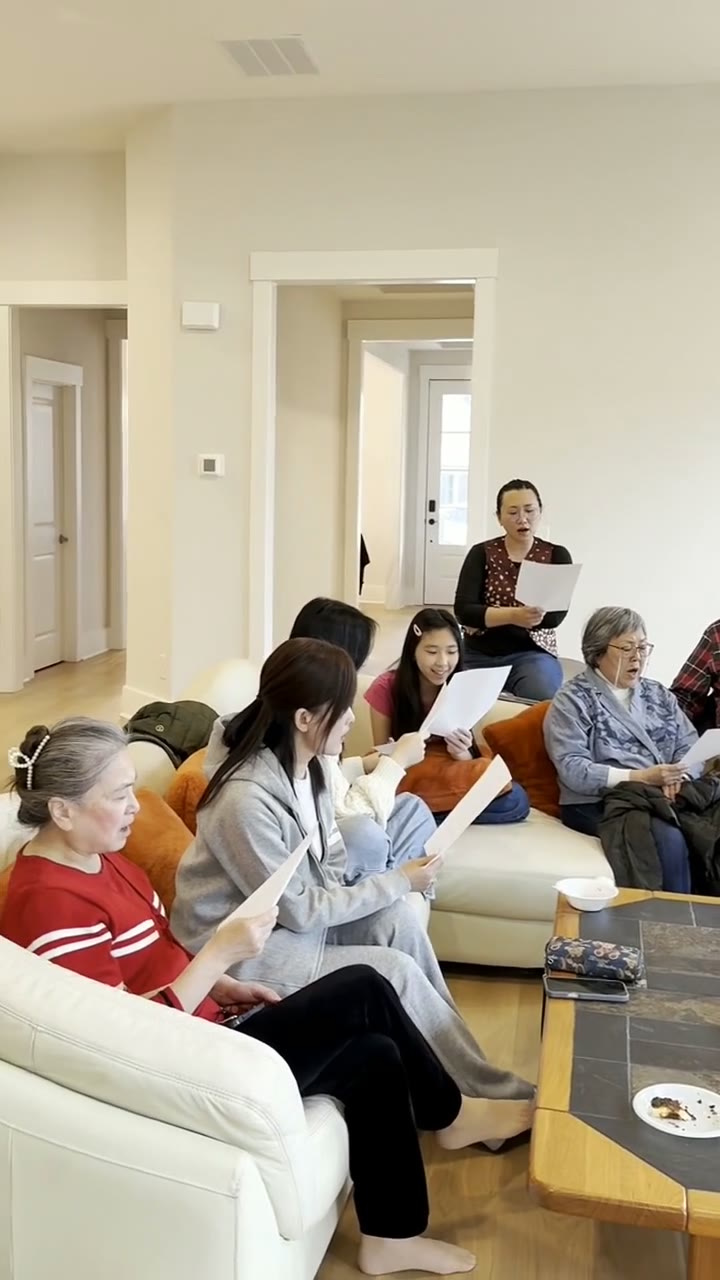
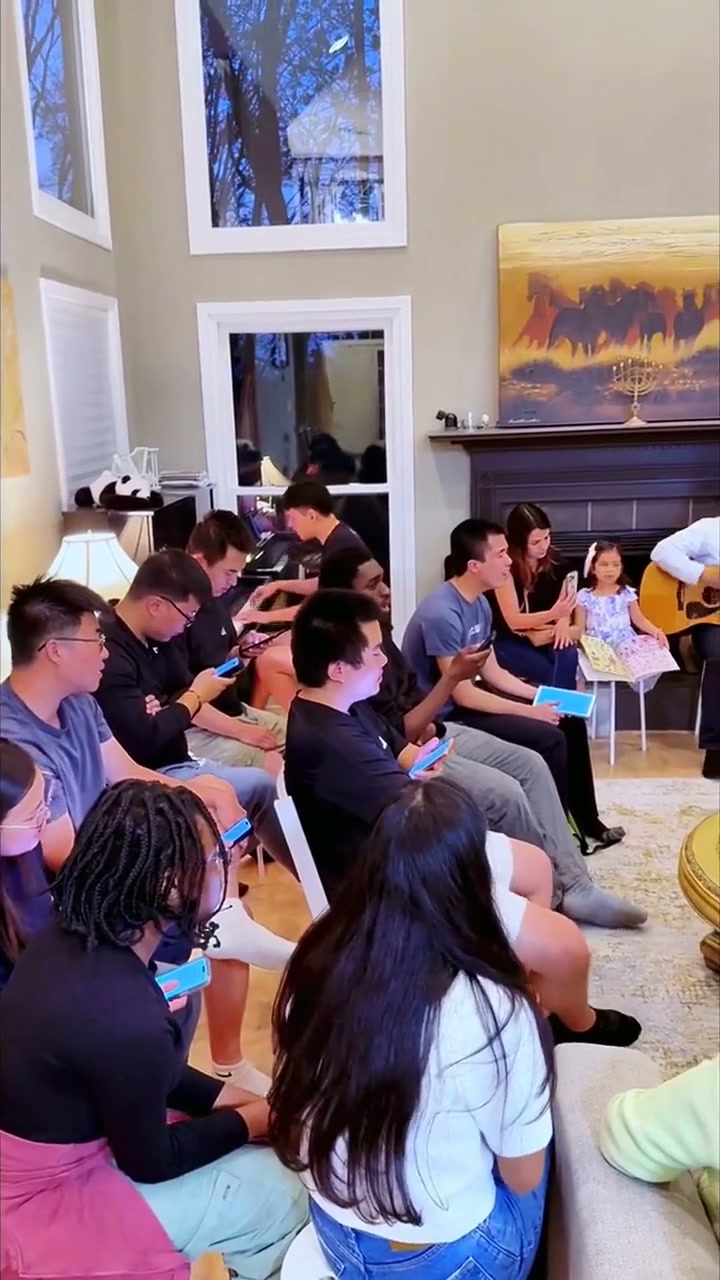
A home gathering sings “The Church Life” in full (both verses) to bid farewell to a 92-year-old sister returning to Taiwan for a year. The church life — practical, and so sweet.
 2 min
Video
A Home Gathering in Atlanta
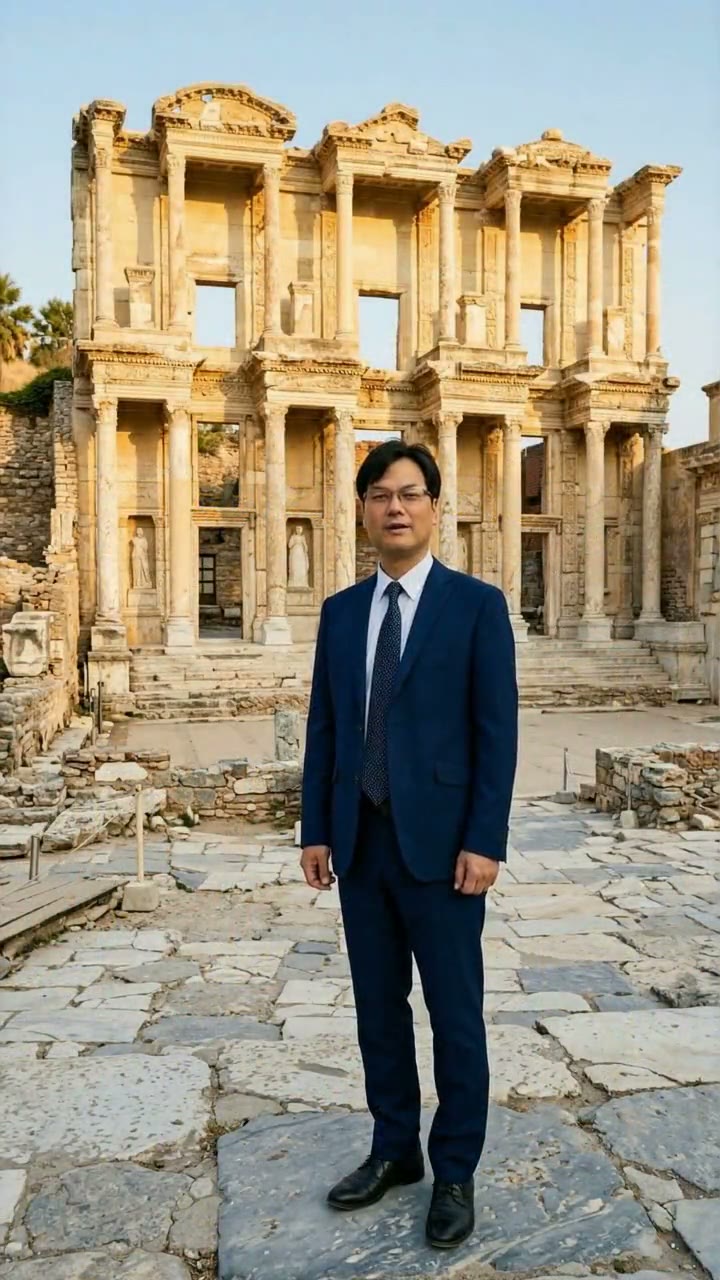
A home gathering in Atlanta — a meal together, Bible reading, hymn singing, and testimonies shared.
 3 min
Video
The Second Journey (Part 1): The Macedonian Call
The second journey begins with a parting: Paul and Barnabas disagree sharply over Mark and separate — Barnabas takes Mark to Cyprus, while Paul chooses Silas and travels through Syria and Cilicia strengthening the churches, then takes Timothy with him at Lystra. They try to preach in Asia, but the Holy Spirit forbids it; they try Bithynia, and are not permitted. Blocked all the way to Troas, Paul sees a vision in the night: a man of Macedonia standing and pleading, 'Come over and help us.' So the gospel crosses the Aegean into Europe. Parting is not the end — restoration is.
 4 min
Video
The First Journey (Part 2): Asia Minor — The Gospel Turns to the Gentiles
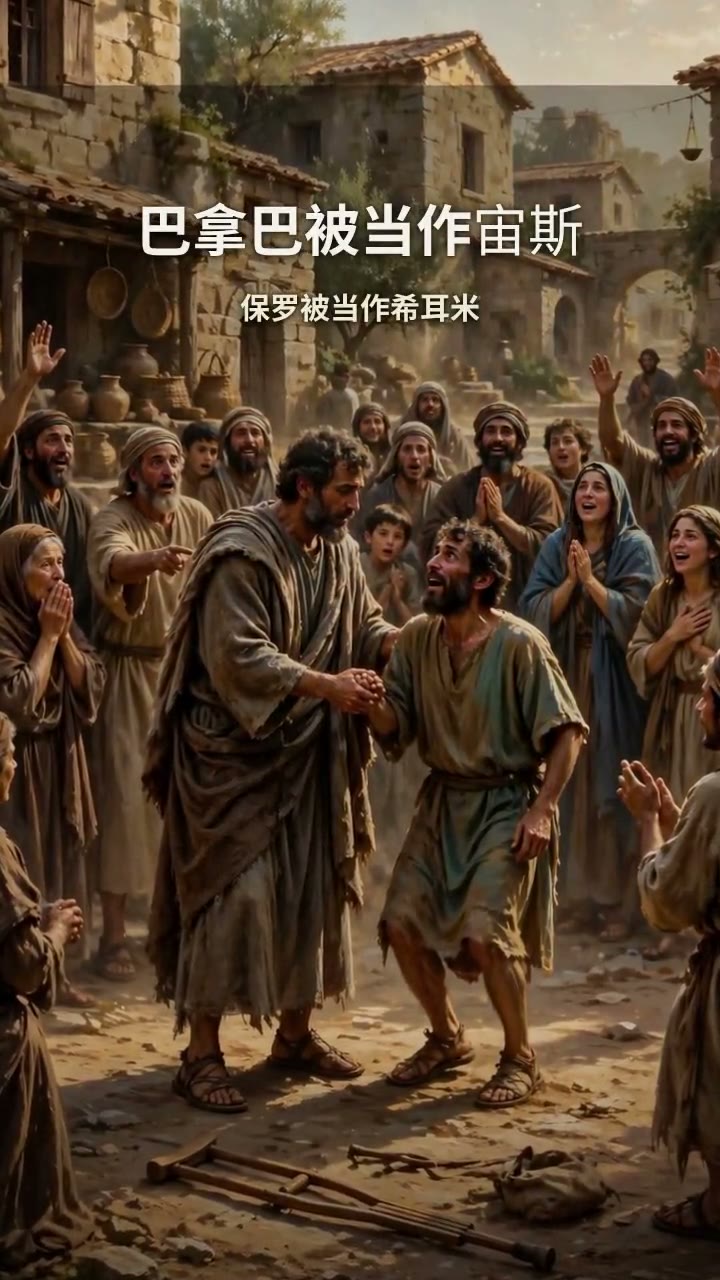
The second half of the first journey, Acts 13:13–14:28: from Paphos they sail to Perga, where John leaves them, and Paul and Barnabas press into Asia Minor. At Pisidian Antioch Paul preaches his first complete message in the synagogue; when it is rejected, the gospel turns formally to the Gentiles. Through Iconium to Lystra, where Paul heals a man lame from birth, is taken for a god, and is then stoned; after Derbe they retrace their steps, strengthening the disciples and appointing elders, and return to Antioch — the first journey ends.